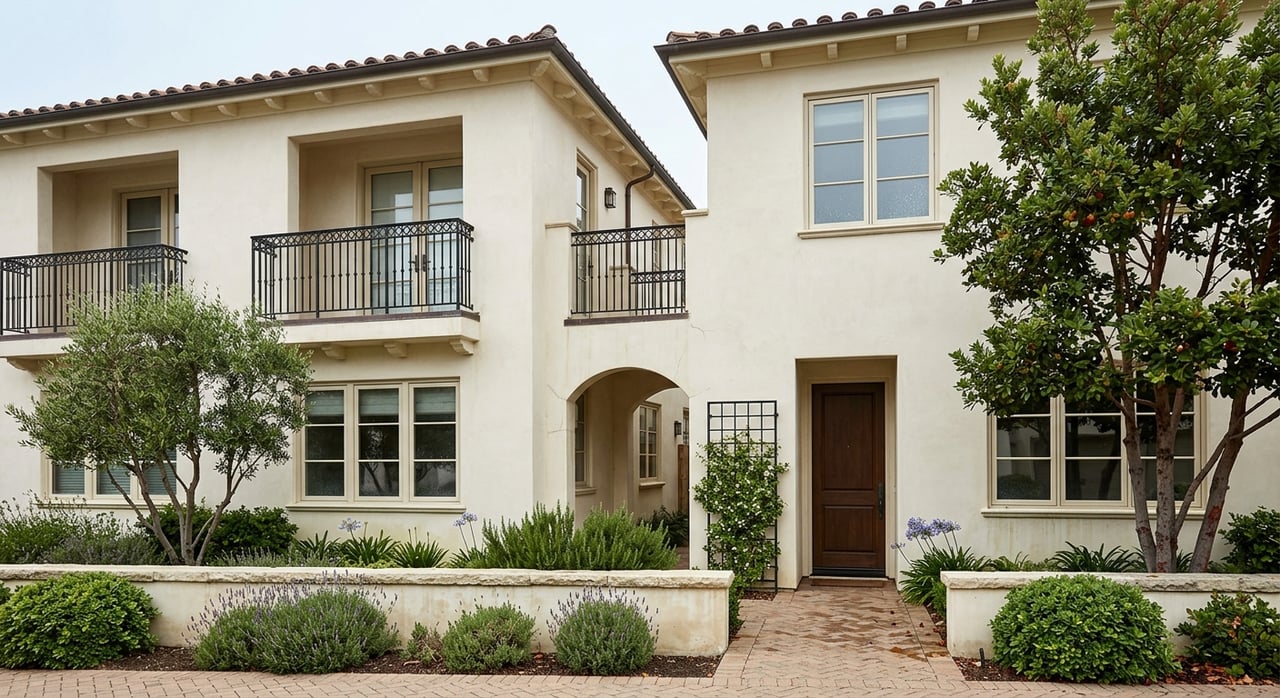
If you want a lower entry point into Marina without giving up homeownership, condos and townhomes are worth a close look. They can offer a more manageable price than many detached homes, but the details vary a lot from one community to the next. If you are considering attached living in Marina, this guide will help you understand where to look, what to compare, and which questions matter most before you buy. Let’s dive in.
Where attached homes are in Marina
Marina’s condo and townhome options are not spread evenly across the city. Much of the attached-home inventory is concentrated in planned redevelopment areas connected to former Fort Ord land, including Sea Haven in South Marina, The Dunes and University Villages, and Marina Station.
According to the City of Marina General Plan, Marina Heights north of Imjin Road includes areas where former military family housing has been replaced by single-family homes and townhomes. The city also maintains planning information for The Dunes and Sea Haven, both of which are part of Marina’s larger growth story.
Marina says it is the fastest-growing community on the Monterey Peninsula, and the city reports that about 950 new homes are planned in the Dunes and Sea Haven tracts over the next seven years. Marina Station is another major planned area, with 1,360 residential units and a mix of housing types.
Why buyers consider condos and townhomes
For many buyers, attached housing in Marina can be a practical way to enter the market. Recent examples in Marina have included attached homes listed from the high $400,000s into the $600,000s, while many detached homes were priced higher on the same market snapshot.
Examples from recent listings include 599 Santa Ynez Way Unit F at $438,000 for 957 square feet, 3137 Seacrest Ave #6 at $525,000, and 3137 Seacrest Ave #5 at $638,250. By comparison, detached listings on the same Marina market page included homes at $699,000, $1.299 million, and $1.378 million.
That does not mean every condo or townhome is automatically the low-cost option. Newer attached homes, upgraded interiors, and monthly HOA dues can narrow the gap, so it helps to compare the full monthly cost, not just the list price.
Condo vs. townhome in Marina
One of the most important things to know is that condo and townhome do not always mean what buyers think they mean. In California, a condo is a legal form of ownership, while a townhome describes a style of home.
The California Department of Real Estate guide to residential subdivisions explains that a home may look like a townhome but still be legally structured as a condo or another type of common-interest development. That is why the ownership documents matter just as much as the floor plan.
If you are shopping in Marina, do not rely only on exterior design or listing language. Ask for the governing documents and confirm exactly what you own, what is shared, and what the HOA controls.
What floor plans look like
Marina’s attached-home market includes a mix of older condo communities and newer entry-level product. Based on recent listings, many condos and townhomes in Marina fall into a fairly compact range, especially at lower price points.
Current examples include a 2-bedroom, 1.5-bath, 957-square-foot condo at Santa Ynez Way, a 2-bedroom, 1.5-bath, 1,004-square-foot condo on Seacrest Avenue, and nearby Seacrest units around 1,192 to 1,264 square feet with 3 bedrooms and 1.5 to 2 baths. Another Marina condo, 3095 Marina Dr #2, was listed with 2 bedrooms, 2 baths, and 971 square feet.
Sea Haven also provides an example of how attached homes can support lower-entry ownership. The city’s Below-Market-Rate Homeownership program includes 2-bedroom townhomes at 957 square feet, with posted prices of $380,000 for moderate-income buyers and $438,000 for workforce buyers.
HOA fees matter more than you think
A condo or townhome payment is more than principal and interest. HOA dues are a major part of the monthly cost, and they can vary widely even within Marina.
Recent examples in Marina show that range clearly. One Sea Haven listing showed a $255 per month HOA fee, the Santa Ynez condo showed $278 per month, and an older Marina Drive condo showed $614 per month. These examples show why it is important to compare what the dues cover and how they affect your total budget.
According to the California DRE subdivision guide, HOA budgets can include regular assessments for daily operations and reserve funding. The same guide notes that special assessments may be charged for major repairs or unexpected costs.
Questions to ask about the HOA
Before you move forward, ask for clear answers to questions like these:
- What does the monthly HOA fee cover?
- How much money is set aside in reserves?
- Are there any pending or likely special assessments?
- Are there pet rules, rental limits, parking restrictions, or guest parking rules?
- Are there architectural rules or approval requirements for changes to the home?
These points can affect both your monthly expenses and your day-to-day experience. In Marina, they can differ a lot from one project to another.
Newer projects need extra document review
If you are buying in a newer Marina development, document review becomes even more important. That includes communities tied to Sea Haven, The Dunes, and Marina Station.
The California Department of Real Estate requires a public report before a buyer becomes obligated in a new subdivision. That report can include important information about CC&Rs, HOA costs, assessments, and other material disclosures.
For buyers, this is not just paperwork. It is one of the best tools for understanding how the community is structured and what your real ownership costs may be.
A Marina-specific closing step
Marina has a local requirement that many buyers do not expect. The city says buyers usually obtain a residential property inspection report from the city before closing, unless an exemption applies.
That report may identify zoning, occupancy, recorded code violations, and whether the building appears substandard. The city also notes that special water restrictions may apply in Sea Haven or The Dunes, which makes this report especially relevant in those communities.
This is a good reminder that buying in Marina is not only about the home itself. Local process details can shape your timeline and your due diligence checklist.
Why Marina’s market is project-specific
Marina’s attached-home market is not one-size-fits-all. An older condo community, a newer Sea Haven unit, and a below-market-rate home can all have very different rules, dues, and long-term costs.
That is especially true as new development continues. The city’s 2025 market study says The Dunes sits in a mixed-use district near CSUMB and that new housing at The Dunes and Sea Haven is creating demand from residents and students. With Marina Station adding more housing supply, the attached-home market will likely continue to be shaped by these newer project pipelines, not just older resale inventory.
For you as a buyer, that means broad citywide assumptions are not enough. The best approach is to evaluate each community on its own terms.
A smart way to compare options
If you are deciding between a condo, townhome, or detached home in Marina, focus on the full picture instead of just the asking price.
Here are the main categories to compare:
- List price
- Monthly HOA dues
- Reserve strength and assessment risk
- Ownership structure and governing rules
- Parking, storage, and shared-space policies
- City inspection and local closing requirements
- Whether the home is part of a deed-restricted or BMR program
This kind of side-by-side review can help you avoid surprises and choose a property that fits your goals now and later.
Final thoughts on Marina condo living
Condo and townhome living in Marina can be a strong option if you want a more accessible entry point, lower exterior maintenance, or a newer planned community setting. The key is knowing that Marina’s attached-home inventory is highly project-specific, with meaningful differences in dues, rules, disclosures, and long-term costs.
If you want help comparing Marina condos, townhomes, and single-family options with a clear local strategy, the team at Homes by Henson is here to guide you through the details with steady, hands-on support.
FAQs
What areas in Marina have the most condos and townhomes?
- Marina’s attached homes are concentrated in planned redevelopment areas such as Sea Haven, The Dunes and University Villages, Marina Heights, and Marina Station, based on city planning information.
What is the difference between a condo and a townhome in Marina?
- In California, a condo is a legal ownership form and a townhome is an architectural style, so you should review the ownership documents instead of relying only on how the home looks.
What do Marina HOA fees usually cover for condos and townhomes?
- HOA dues may cover common area maintenance, reserves, and other community costs, but coverage varies by project, so you should review the budget, rules, and any special assessment history.
Are condos in Marina cheaper than single-family homes?
- Attached homes in Marina often offer a lower entry price than detached homes, but your total monthly cost can change depending on HOA dues, size, and the age of the community.
Do Marina condo buyers need a city inspection report before closing?
- In many cases, yes. The City of Marina says buyers usually obtain a residential property inspection report unless an exemption applies.
Are there below-market-rate townhomes in Marina?
- Yes. The City of Marina lists below-market-rate homeownership opportunities in Sea Haven, including 2-bedroom townhomes with income-based pricing for qualified buyers.