If you have ever wished for more sunshine without giving up the Monterey Peninsula lifestyle, Carmel Valley likely stands out for a reason. Many buyers are drawn to the area because it feels warmer, more open, and more relaxed than the coast, yet it still stays connected to the places they know and love. Understanding what that really means can help you decide whether Carmel Valley fits the way you want to live. Let’s dive in.
What “sunbelt” means in Carmel Valley
Carmel Valley’s “sunbelt” reputation is real, but it helps to define it clearly. In this case, sunbelt does not mean desert heat or a totally dry climate. It means an inland microclimate that is generally less affected by coastal fog.
According to climate normals from the NOAA Carmel Valley station, summer highs in July through September run about 78.9°F to 81.4°F. By comparison, Monterey on the coast sees summer highs around 65.8°F to 68.2°F. That difference helps explain why Carmel Valley often feels sunnier and warmer in the afternoon.
At the same time, rainfall is fairly similar. Carmel Valley averages roughly 18 inches of annual precipitation, while Monterey averages about 17.1 inches. So the biggest difference is not that Carmel Valley is dramatically drier. It is that you often get warmer daytime weather with less marine-layer influence.
Expect sunny days and cool evenings
One of the most important lifestyle details is how the temperature shifts through the day. Carmel Valley can feel bright and comfortable in the afternoon, then cool off noticeably once the sun drops. That pattern is part of what many people enjoy about the area.
If you picture outdoor meals, patio time, or evenings under string lights, this matters. You may enjoy more daytime sun than you would closer to the coast, but you will still want layers for later in the day. In other words, Carmel Valley offers warmth with balance, not constant heat.
Why Carmel Valley feels more spacious
Part of Carmel Valley’s appeal comes from weather, but a big part comes from land use. Monterey County’s Carmel Valley Master Plan is designed to preserve rural character, open space, scenic resources, watershed protection, and agricultural lands. It also directs denser development into designated commercial cores rather than allowing a more suburban pattern to spread everywhere.
That planning approach shapes how the valley feels when you drive through it. You are more likely to notice separation between homes, open land, and a broader sense of space. The result is a setting that often feels less packed in than many other peninsula areas.
The county’s density example makes that easier to understand. On a parcel with a maximum land-use density of one unit per 2.5 acres, 100 acres would yield 40 sites. For buyers, that helps explain why Carmel Valley can feel rural, spread out, and visually open rather than tightly built.
A compact village within a rural setting
Carmel Valley is not one continuous, dense town center. County policy calls for a concentrated village commercial core with nearby residential areas, along with pedestrian access, walkways instead of conventional sidewalks, bike routes, and shortcut trails. That creates a different rhythm than what you might expect in a more urban setting.
For you as a buyer, that often means a mix of experiences. You can enjoy a small village hub for day-to-day outings, then return home to a lower-density setting. That balance is a big part of Carmel Valley’s identity.
The lifestyle mix: village, vineyards, and outdoors
Geographically, Carmel Valley stretches about 15 miles from Cahoon Ranch to Carmel Bay, bordered by the Sierra de Salinas to the east and the Santa Lucia Range to the west. That layout helps explain why the area feels both inland and connected to the peninsula. You are not living directly on the coast, but you are still very much part of the broader Monterey Peninsula lifestyle.
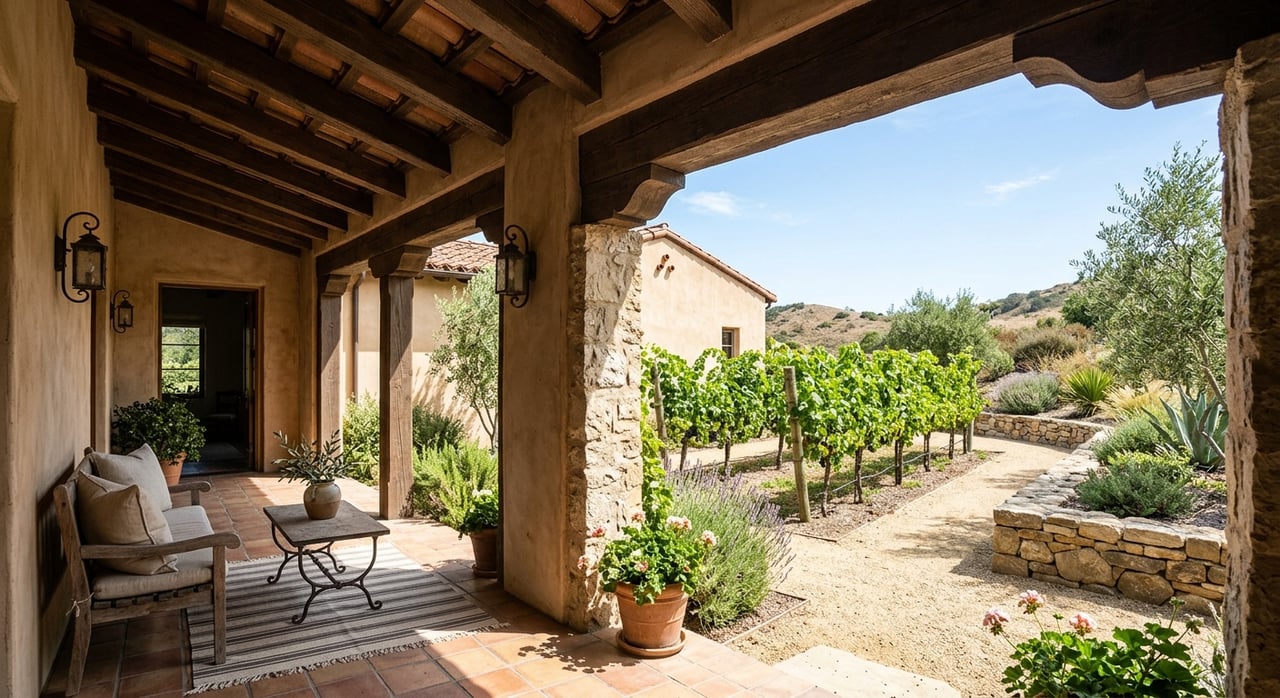
The valley also has a strong wine-country identity. Monterey Wines describes the Carmel Valley wine area as rugged and rustic, with vineyards primarily in Carmel Valley and Cachagua Valley, and notes that the mountainous setting lifts vineyards above the fog line into a warmer climate. That gives the area a distinct blend of residential living, vineyard surroundings, and hillside scenery.
This can be especially appealing if you want a home environment that feels calm and tucked away, while still offering places to spend time locally. Carmel Valley is often less about bustle and more about atmosphere.
Everyday amenities in Carmel Valley
While Carmel Valley is low-density, it is not without everyday gathering places. Carmel Valley Community Park offers about 6.8 acres of landscape lawn, walking paths, gathering areas, and event space. That gives residents a practical place for recreation and community events.
Garland Ranch Regional Park adds another layer to the outdoor lifestyle, with opportunities for hiking, horseback riding, and limited mountain biking. If spending time outside is part of how you recharge, these nearby options are part of the area’s appeal.
The Carmel Valley Branch Library also serves the community. Together, these spaces support a modest but real civic center, even though the valley remains intentionally less urban and less dense.
Who Carmel Valley tends to fit best
Carmel Valley can be a strong match if you want more sunshine, more space, and a quieter pace while staying on the Monterey Peninsula. It often appeals to buyers who value privacy, rural character, and a lifestyle shaped by outdoor living rather than dense development.
It may be less ideal if your top priority is tight walkability or city-style convenience. The county’s land-use goals support a small village core within a much broader rural landscape. That means your experience here may feel more spread out and more driving-oriented than in a compact coastal town.
For some buyers, that is exactly the point. The tradeoff for more sun and space is that Carmel Valley tends to feel less urban and less immediate in its layout.
What buyers should watch before purchasing
In Carmel Valley, due diligence matters at the parcel level. This is especially true compared with a standard subdivision, where many infrastructure questions are more uniform from one property to the next. Rural and semi-rural settings often call for closer review.
Monterey County’s master plan points to several practical issues buyers should keep in mind. These include fire-district review of development, fire-resistant measures in high and very high fire hazard areas, and attention to water flow and on-site sewage issues. Monterey County also regulates septic permits and requires well testing and registration.
That does not mean buying in Carmel Valley is unusually difficult. It means you should approach the process with clear information and a careful plan. If you are looking at a specific property, understanding these details early can help you make a more confident decision.
What this means for your home search
If Carmel Valley is on your shortlist, it helps to think beyond square footage alone. The bigger question is how you want your days to feel. Do you want warmer afternoons, room to spread out, and a setting that leans rural rather than suburban?
You should also consider how much value you place on village-scale amenities versus dense convenience. Carmel Valley offers a very specific mix: sun, scenery, open space, and a quieter day-to-day rhythm. For the right buyer, that combination is hard to replicate elsewhere on the peninsula.
When you tour homes here, pay attention to more than the house itself. Notice the drive, the spacing between properties, the afternoon sun, the evening temperature shift, and how close you feel to the village and outdoor spaces you would actually use. Those details often matter just as much as the floor plan.
Carmel Valley stands out because it offers a different version of peninsula living, one shaped by microclimate, land preservation, and a slower pace. If you want help comparing Carmel Valley to other Monterey Peninsula areas, the team at Homes by Henson is here to guide you with local insight and thoughtful, hands-on support.
FAQs
What does “sunbelt” mean in Carmel Valley real estate?
- In Carmel Valley, “sunbelt” generally refers to a warmer inland microclimate with less coastal fog, not a formal designation or desert-like weather pattern.
How warm does Carmel Valley get in summer?
- NOAA climate normals show summer highs in Carmel Valley around 78.9°F to 81.4°F from July through September, which is warmer than coastal Monterey.
Does Carmel Valley get much less rain than Monterey?
- No. Carmel Valley averages about 18 inches of annual precipitation, compared with about 17.1 inches in Monterey, so the main difference is warmth and fog influence rather than a major drop in rainfall.
Why do homes in Carmel Valley feel more spread out?
- Monterey County’s planning framework emphasizes preserving rural character, open space, scenic resources, and agricultural land, while directing denser development into designated commercial cores.
What kind of lifestyle does Carmel Valley offer?
- Carmel Valley offers a mix of village amenities, vineyard-country character, and outdoor access, with a lower-density setting that feels quieter and more rural than many coastal areas.
What should buyers review before buying a home in Carmel Valley?
- Buyers should pay close attention to parcel-specific issues such as fire-related requirements, water flow, on-site sewage considerations, septic permitting, and well testing or registration when applicable.